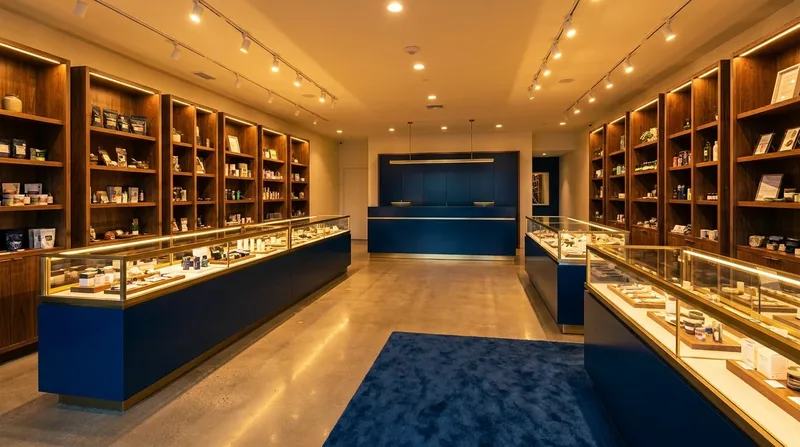
Utah Medical Cannabis Business Licenses: Cultivation, Processing and Pharmacies
Utah Medical Cannabis Business Licenses: Cultivation, Processing and Pharmacies
Utah licenses a small number of businesses to grow, process, and sell medical cannabis. If you are searching for a utah cannabis dispensary license, know first that Utah does not use the word dispensary in its program. The state licenses medical cannabis pharmacies to dispense products to patients with valid medical cards. This guide covers the three license types, the caps that make these licenses scarce, which agency runs the program during the current transition, and the ordinary business filings you need in any case.
Disclaimer: This guide is informational content. It is not legal, tax, or regulatory advice. Program rules, agency names, and fees change, and some details below are in transition. Confirm every figure with the agency named, and talk with a qualified attorney and a CPA before you spend money, sign a lease, or file.
The Three License Types
The medical cannabis program covers three kinds of licensed operation. Each one is a separate license with its own requirements.
- Cultivation facility: grows medical cannabis. Utah law caps the number of cultivation facilities at 8.
- Processing: turns harvested cannabis into medical cannabis products. H.B. 389 (2026) exempts medical cannabis processors from a separate hemp processing license, so a medical processor does not need that second license for the same operation.
- Pharmacy: dispenses medical cannabis products to patients. Utah law caps the number of pharmacies at 15.
Why the Caps Decide Your Plan
The caps are the most important fact in this guide. Utah law limits cultivation facilities to 8 and pharmacies to 15. The state can add pharmacies after a market analysis, and H.B. 54 (2025) added rural independent pharmacy licenses. Whether and when the state opens another round is a question for the program itself. Do not assume a new round from the statute alone.
In practical terms, most applicants will never receive one of these licenses. Build your plan so that it works without one. If you are considering a cannabis-related venture, the realistic first steps are the general business filings covered below, which apply to any company in Utah.
Demand is real. According to the state monthly report, 113,202 patients held active medical cards in April 2026. That figure tells you about patient demand, not about how many licenses the state will issue.
Who Runs the Program Right Now
Medical cannabis duties are moving between state agencies. H.B. 389 (2026), effective May 6, 2026, moves all Department of Health and Human Services medical cannabis duties to the Department of Agriculture and Food. That transition runs from May 6, 2026 to January 1, 2027. During the transition, a given question or filing may go to either agency, so ask which office holds your file before you rely on any timeline.
The same bill renames the licensing advisory board the Specialized Product Authority Licensing Board. Older articles, forms, and web pages may still use the previous names. For current program information, start at the state program site:
Pharmacy Zoning and Local Approval
Under state law, a medical cannabis pharmacy is a permitted use outside primarily residential zones. That does not mean every commercial lot qualifies. Cities set their own buffer requirements, and those buffers differ from one city to the next. Do not rely on a summary, including this one, for any buffer distance. Check with the city or county planning office for the specific parcel before you sign a lease or buy a building.
Zoning is where a site most often fails after the money is already committed. Get written zoning confirmation for each candidate location.
The Business Filings You Need Anyway
A medical cannabis license sits on top of an ordinary Utah business. Utah has no statewide general business license. Your sequence is the entity registration, the local business license, and the tax accounts. The entity filing is a registration, not a license, so registering with the Division does not by itself let you operate.
1. Register the Entity
An LLC is formed by filing a Certificate of Organization with the Utah Division of Corporations and Commercial Code, Utah Department of Commerce. The filing fee is $59. Most online filings are processed and approved instantly. Filings that need manual review are stated as 2 to 4 business days, and the Division has posted 7 to 10 business days during backlogs. Expedited processing is $75 per filing. A corporation files Articles of Incorporation for the same $59 fee.
If you need time to settle on a name, a name reservation costs $22 and holds the name for 120 days. Your entity name must contain an approved designation such as LLC or limited liability company, and it cannot imply that the company is a state agency.
Every registered entity must name a registered agent with a Utah street address. A PO box may be listed only in addition to a street address. A commercial registered agent costs $52 to register.
2. Get the Local Business License
The business license comes from the city or town where you are located, or from the county if you are outside city limits. A city license does not transfer to another city, so a pharmacy that moves across a city boundary needs a new local license. Confirm the current fee and application with the city or county, because this guide does not list those fees.
3. Register an Assumed Name if You Need One
If you will operate under a name other than your legal entity name, file an assumed name, also called a DBA or Business Name Registration. It is filed with the state Division, not the county. The fee is $22 to register. Check the Division's DBA page for the renewal term and fee.
4. Set Up the Tax Accounts
Any seller with an established presence in Utah needs a Utah Sales Tax License from the Utah State Tax Commission, which you register through the TAP system. The state sales tax rate is 4.85%, and combined state and local rates run from 6.35% to 9.55%, and up to 10.05% in some special districts, depending on jurisdiction. Ask the Tax Commission how these rates apply to medical cannabis products before you set prices.
Your income tax treatment depends on your entity. An LLC is taxed by default as a partnership or sole proprietorship, and income passes through to members at Utah's flat 4.45% individual rate (2026). An LLC that elects corporate treatment pays the 4.45% corporate franchise and income tax, with a $100 minimum tax. Federal tax rules for cannabis businesses differ from ordinary business rules, so have a CPA review the structure before you open.
Ongoing Costs to Budget For
| Item | Cost | Where to confirm |
|---|---|---|
| LLC Certificate of Organization | $59 | Division of Corporations and Commercial Code |
| Annual renewal (LLC or corporation) | $18, due yearly | Division of Corporations and Commercial Code |
| LLC late renewal fee | $10 | Division of Corporations and Commercial Code |
| Name reservation (120 days) | $22 | Division of Corporations and Commercial Code |
| Assumed name (DBA) | $22 to register; check the Division for renewal | Division of Corporations and Commercial Code |
| Commercial registered agent | $52 to register | Division of Corporations and Commercial Code |
| Medical cannabis license application and program fees | Not listed here | medicalcannabis.utah.gov |
| City or county business license | Not listed here | Local city or county office |
The LLC annual renewal is due one year from registration and every year after. The renewal window opens 60 days before the anniversary date. A late renewal fee of $10 applies to LLCs.
Hemp Is a Separate Category
Readers often confuse medical cannabis with hemp. H.B. 389 requires hemp retailers to check ID for buyers 21 or older. A hemp retail store is not a medical cannabis pharmacy, and this guide does not cover hemp retail licensing.
Steps to Take If You Still Want to Apply
- Read the current program pages at medicalcannabis.utah.gov, and confirm which agency is handling your file during the transition.
- Confirm the current caps and whether the state has opened new pharmacy licenses, including rural independent pharmacy licenses under H.B. 54 (2025).
- Confirm zoning and buffer requirements for each candidate parcel in writing with the city or county.
- Register the entity with the Division, and reserve a name first if you need time.
- Obtain the local business license and register your sales tax account with the Tax Commission.
- Have an attorney experienced in medical cannabis licensing review the application, operating agreement, and lease before you file.
Where to Confirm Each Detail
- Business entity filings and names: businessregistration.utah.gov and commerce.utah.gov/corporations
- Assumed names (DBA): commerce.utah.gov DBA page
- Taxes and sales tax registration: tax.utah.gov and the TAP sales tax registration
- Medical cannabis program: medicalcannabis.utah.gov
- Free general business advising: Utah Small Business Development Center
Alcohol licensing is a separate matter. The Department of Alcoholic Beverage Services (DABS) regulates alcohol, not medical cannabis, so do not look to DABS for a medical cannabis license.
The Bottom Line
Three facts decide whether a medical cannabis plan is worth pursuing: the 8 cultivation and 15 pharmacy caps, the agency handling your file during the January 1, 2027 transition end date, and the zoning and buffer rules in your city or county. Check those first, before you spend money on an entity, a lease, or a build-out.
Disclaimer: This guide is informational content, not legal or tax advice. Consult a qualified attorney and a CPA for your situation before making any filing or financial commitment.